
Pushkin’s Conflict: Between Lyceum and Internet
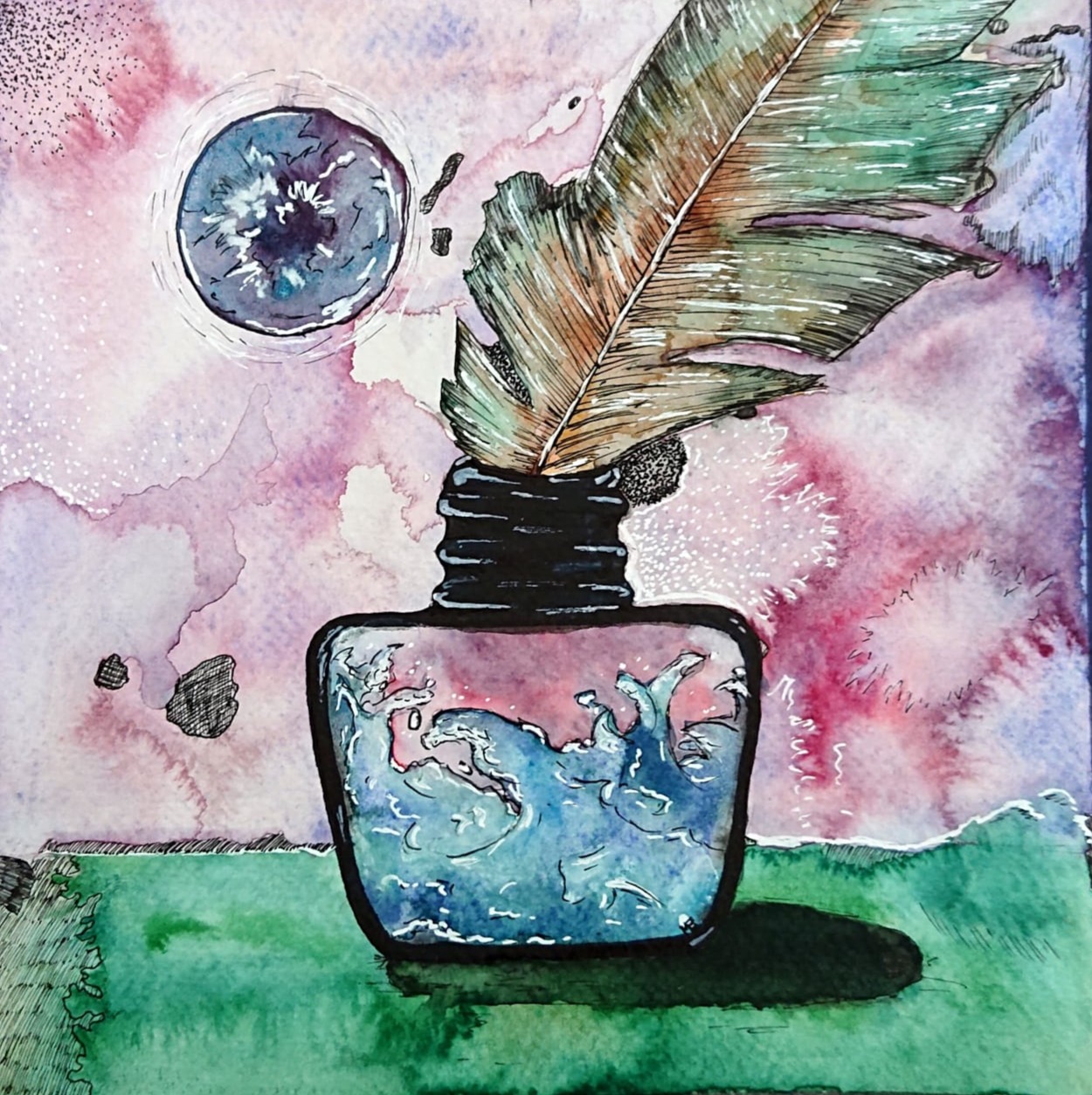
Creative dialogue is the main remedy against the dictate of fanaticism
Alexander Pushkin was born into one of the most traditional families of the early nineteenth century and grew up with the prospect of studying at the most loyalist lyceum of his time. The Tsarskoye Selo Lyceum was founded not so much with the aim of forming a new elite of Russia according to liberal ideals, as to designate the continuity of values from Catherine the Great to Alexander I of Russia. In an atmosphere of such expectations, Pushkin entered the lyceum.
Pushkin’s creative birth, too, to some extent resembles state dynamism, expectations, and continuity. Pushkin began his path into creativity as a path of antagonism. Besides the antagonism and political struggle into which he entered with the work Ode to Liberty, he also experienced a passion for personal, philosophical conflict. Since his childhood, Pushkin loved to try on for himself the role of an antagonist in opposition to the poetic world. At sixteen, Pushkin wrote to Vyazemsky: “I assure you that solitude, in fact, is a very foolish thing, in defiance of all philosophers and poets who pretend as if they have lived in villages and are in love with silence and quiet.”
Upon detailed consideration of the letter, it turns out that Pushkin was not simply bored with the lyceum, but that it was precisely in this period of life that his own individual philosophical conflict began to form, which every writer has. Subsequently, Pushkin would oppose historical figures to their epochs, personality to their position, seasons to the emotions they evoke.
With the germ of such moods, in the lyceum, Pushkin was given the fate to touch another identity, different from the domestic one; where another vocabulary of definitions prevailed, and where the Encyclopédie of Diderot was read as a bible for the Jacobins. However, when Pushkin returned home, he found himself in a world where people were fond of the writings of Voltaire not because of protest against fanaticism. On the contrary, in the culture in which the family of the young Pushkin lived, this was a way to preserve former views and to define who was one’s own and who was a stranger. One’s own was the one who was ready to accept the liberal ideas introduced into fashion by Catherine the Great as a form, but not to accept them as an essence.
The result produced a double life of Russian educated people: with a pen before a book, their life flowed under reason, but having stepped away from the pen, life again returned to the oppression of the peasants. Because of this, many nobles, who later became Decembrists, preferred to serve through the military path instead of managing an estate (at that time nobles were either military or landed). As academician Yuri Lotman wrote: “from here also the striving to replace serf-owning practice with refined words.” When a conflict is simply described in literature, it is aestheticized. Meanwhile, Voltaire did not simply write about philosophy; he could allow himself to live within the framework of his philosophy whereas the serf-owners of nineteenth-century Russia were squeezed between secular liberal expectations and the management of an estate with peasants as a form of service.
In the lyceum, Alexander Pushkin began to write small witticisms, which helped to endure conflicts and misunderstandings more easily. To give the conflict a form, to embed it into a literary tradition going back to Voltaire. In this way, Pushkin mastered a centuries-old instrument of understanding others. Conflict, with such an approach, is felt not as a problem that implies losses, but as a natural dynamic of life. However, in the modern world, a person endures conflicts more sharply. For without form, anger and aggression penetrate into all areas of human life, including the family.
With the development of information technologies, people are less and less connected with their family. If earlier the family could provide a place in the world, and together with the family a person felt a spiritual connection with ancestors, then in the modern world it is easy to solve applied aspects of life, such as finding a job, without the family. And in the spiritual sense, modern society places individual freedom higher than the often ambiguous past of ancestors.
In the modern world, people prefer to break family ties at the very first irresolvable ideological conflict. This feature is strengthened by the scale of the mediatization of the modern world, ready to offer each person a unique worldview, but in fact leads to the cognitive error of “confirmation bias.” When a person subconsciously seeks, interprets, and remembers information that confirms their already existing beliefs, ignoring contradictory facts, a person often becomes a hostage of this informational bubble, considering all other points of view erroneous. This is superimposed on the ever greater psychological instability of the person of the twenty-first century.
The ever greater emotional intensity of politics strikes the individual in particular. In public life in Putin’s unfree Russia, where those who disagree with the activity cannot change anything, from hopelessness they begin to seek an outlet in emotions. All this reduces the probability of a respectful discussion, and increases the risk of rudeness, which often negatively affects the image of the opposition movement. To a greater extent, the absence of mutual understanding, against the background of the devaluation of family values, destroys traditionally close ties. Distancing children from parents, leaving the latter in loneliness.
But one should not forget about the real repressive risk of Putin’s Russia, which makes the presence of people with a liberal, and at the same time creative consciousness physically dangerous. As a result, the question arises about the preservation of the tradition of creativity in Russia. For creativity presupposes dissent. However, even if we discard the authoritarian factor, the problem of the “easy possibility of breaking family ties” will remain, because of which creative traditions will not be passed from generation to generation.
The main solution to this paradox that the epoch of Alexander Pushkin can offer us is to look at creativity as a tradition of dialogue. This perspective presupposes personal readiness and precision before interaction with others. And in contrast to the subjective confirmation bias, which is formed on the basis of someone else’s opinion, Pushkin offers us the sovereignty of personality through work on oneself. It unites in itself both the defense of personal boundaries and self-realization. Thus, a person ceases to defend personal boundaries through family conflicts, and a chance appears to save family ties.
The path of solution through the tradition of creativity must presuppose going beyond boundaries and carrying dialogue. Pushkin’s creative work matured in antagonism, but nevertheless in a dialogue with intellectual tradition. Composing his small epigrams in the lyceum, Pushkin showed them to his friends, classmates, imitating the literary salons of the gallant age. Tradition cannot exist without communication, just as cultural communication does not exist without tradition.
A gloomy trio of singers there is: Shikhmatov, Shakhovskoy, Shishkov; For the mind there is a trio of enemies: Shishkov, our Shakhovskoy, Shikhmatov; But who is the most foolish of the evil trio? Shishkov, Shikhmatov, Shakhovskoy!
The opposite path to this is the creative aestheticization of conflict outside of tradition. Such a path presupposes the fixation of conflict for a narrow group, thereby producing the same type of informational bubble as confirmation bias. Alas, we can see it by looking at the actions of opposition Russians from emigration. The desire to unite in circles, journals, channels, pushing away everything that is disagreeable. To engage in repelling creativity, instead of dialogue between one camp and another under the aegis of respect. And this problem is fateful for the Russian opposition everywhere: in emigration or in the fronde in Russia. And it will be bitter when their dream comes true, Vladimir Putin falls and today’s dissidents return to politics: then they will not be able to give guarantees of the impossibility of tyranny already from their own side. “Nobly one can make a revolution. But to take power into one’s hands nobly is already impossible” (attributed to Friedrich Schiller).
The mode of creativity, by its connection with Alexander Pushkin, Voltaire, and all philosophy, raises many questions about family, misunderstanding, and the rupture of generations. Answers to them, Russians find already now in memes, articles, in threads on Pikabu (a Russian analogue of Reddit). This helps to translate conflict from the philosophical part into the practical. There, one can often notice how a meme about the blocking of social networks in Russia gathers multilayered responses. Journalist Maxim Katz gives an example of when children first teach their elderly parents how to use WhatsApp, after which the government blocks it. This forces a long re-teaching of an old person to a new interface of Telegram, which was also recently slowed down in favor of the Russian analogue, the messenger Max. And here, for children burdened with responsibilities, a dilemma arises. Either to master, together with their elders the new messenger Max (it probably does not need to be explained how difficult new technologies are for elderly people, especially when they are afraid to press an extra button). Or else to connect to an expensive VPN, the prices of which grow because of blockings. At the beginning, especially young people might experience a slight enthusiasm from the fact that they personally managed, with the help of a VPN, to overcome the obstacles that their own state erects on the path to the internet. This inspires them to create and spread ironic memes about the situation.
Another case is when they begin to block the entire internet except that controlled by the state — this begins to irritate and anger the masses. Then, on Pikabu, one can observe an interesting phenomenon: a person writes their indignation about the ruling party; however, at the end adds that they fully support the war and the president. In response to such posts, people often ask: “Why add a loyalist frame at the end of your indignation?” Other users, bolder, begin to ironize and express the idea that the loyalist form is necessary so as not to accidentally accuse that one single Russian for whom an independent internet is a mortal threat.
In such moments it is especially important for leaders of the opposition movement not to close themselves within their own community, but to conduct dialogue, which constitutes the foundation of creativity. A great mistake is to come to people who are not immersed in politics with an ultimatum: “are you for Vladimir Putin or against?” — such an ultimatum immediately places an ordinary person under the dictate of a position. Opposition activists need to make use of their main advantage over власть: the “absence of dictate.” And through free creativity, memes, clubs open to all Russians, to create a space for dialogue and doubt.
Written by Ilya Ganpantsura.
Cover photo by Vladislav Erekaikin.
References
Pushkin, Alexander. "Sochineniia i pis'ma A. S. Pushkina. Vol. 6, Zhurnal'nye i drugie stat'i i zametki; Stat'i avtobiograficheskie (1819–1837)". St. Petersburg: Prosveshchenie, 1904.
Pushkin, Alexander. "Sochineniia i pis'ma A. S. Pushkina. Vol. 8, Pis'ma (1815–1837)". St. Petersburg: Prosveshchenie, 1906.
Pushkin, Alexander. "Izbrannye stikhotvoreniia i poemy". Leningrad: Lenizdat, 1949.


